
Bartlett City Directory Collections
Bartlett has no documented stand-alone run that should be treated as a full municipal roster. The strongest published route is the Shelby County Register’s regional Memphis City Directories collection. Its reach matters because Bartlett’s historical trail frequently sits in the larger Memphis and Shelby County record world. A Bartlett-area appearance is a useful lead, but it does not establish that every local household was included in every year. Check the particular volume’s geographic scope, then use a deed, census schedule, or archive source to test the lead.
| Collection | Years | Where held | Access route |
|---|---|---|---|
| Memphis City Directories | 1849-1943 | Shelby County Register archive | Digitized year, section, and alphabet browse |
| R. L. Polk volumes | 1891-1943 | Shelby County Register archive | Digitized browse, including street sections |
| Regional directories, phone books, and yearbooks | Dates vary | Memphis Public Libraries History Department | Research visit and staff assistance |
| Bartlett historical files and photographs | Dates vary | Bartlett Historical Society | Visit or arrange a special tour |
The official archive selector begins with Twyman in 1849, followed by Rainey, Tanner, several mid-1860s publishers, Boyle-Chapman, Sholes, Dow and DeGaris, and then Polk. The selector has no 1911 volume. Those gaps are part of the record, not evidence that a household disappeared.
Start with the Shelby Register archives source that describes the wider collection coverage.
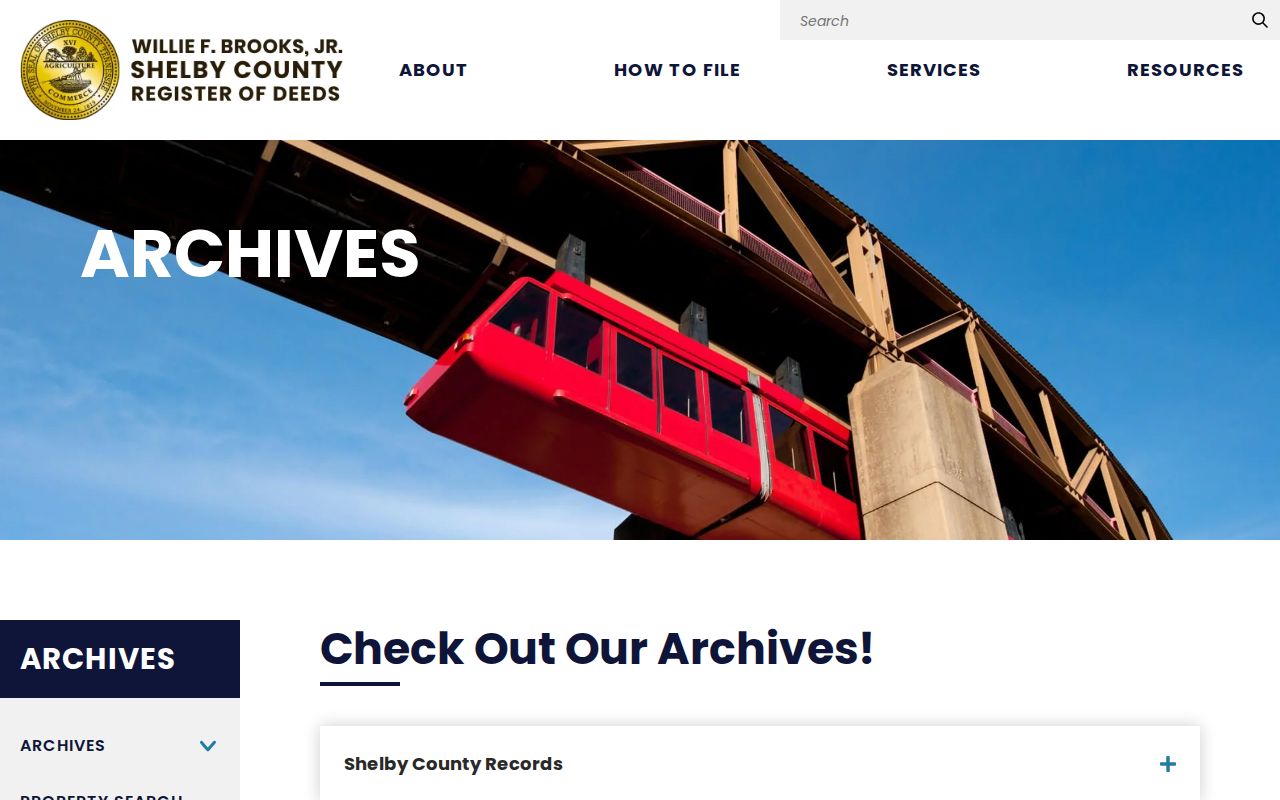
The archive list places city directories beside probate, vital, aerial, and other historical series that can confirm or qualify a directory clue.
Bartlett City Directories, 1849-1943
The title “Memphis City Directories” should not be read as a promise that the material is only about Memphis. Bartlett began as a stagecoach way station and Union Depot area around 1829, incorporated in 1866, and developed within Shelby County’s changing geography. Earlier people, property, and court material may therefore be found in county collections based in Memphis. The archive’s 1849-1943 run supplies a regional printed layer for that setting, while its Occupant, Entry, and Survey Books reach back to 1819 for land evidence.
There is no sound basis for turning Bartlett’s three 1924 business-district fires into a records-loss story. The research identifies the fires but does not identify a destroyed government record series. The better historical reading is to follow the surviving county archives and to allow for Bartlett’s later growth and annexation.
| 1849 | Twyman begins the documented selector. |
|---|---|
| 1872-1876 | Boyle-Chapman appears in the official publisher inventory. |
| 1877-1885 | Sholes volumes appear in the documented run. |
| 1891-1943 | R. L. Polk volumes provide the long later sequence. |
Note: A publication gap or a missing listing needs a second source before it can support a family-history conclusion.
Browse a Bartlett City Directory Volume
The Register interface is a browse tool, not a modern free-text person search. Choose a City Directory year first, then choose the dynamic Section and Alpha values before submitting. Open the front matter and abbreviation pages before relying on a name entry. In the 1893-and-later volumes, the available sections can include preface, alphabetical names, street, business, and appendix. The alphabetical selector also contains a Mc grouping, which can matter when a surname is filed under a volume’s printed convention.
The Register directory browse screen illustrates the required selection path.
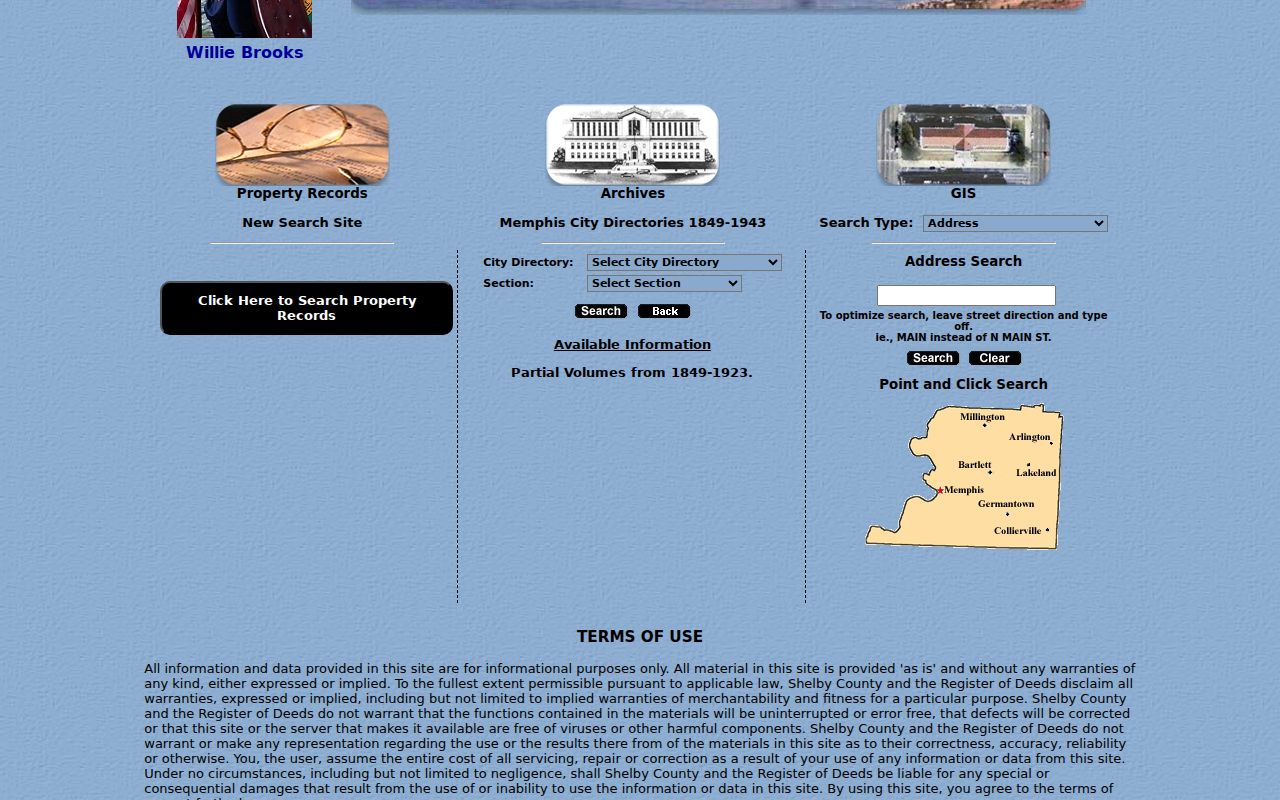
Use the alphabetic part for person-to-address work and the street part for the reverse address-to-listed-householder route.
Reading a Bartlett City Directory Entry
A 1943 R. L. Polk entry can hold more than a name. The verified image and its preceding abbreviation key show how the volume expresses home, residence, widow, and other printed shorthand. Read the key in the volume being used because shorthand and page organization can change. An entry may identify a person or business, a spouse or relationship notation, an occupation clue, a home address, and sometimes a telephone listing. It is a printed directory entry, not a deed, voter roll, or complete household account.
| Name | Person or business name filed in the alphabetical section. |
|---|---|
| Relationship | Spouse or widow notation where the printed entry provides it. |
| Work clue | Occupation or employer notation where printed. |
| Home clue | Residence or home address, sometimes with a telephone listing. |
| Street route | Address to listed householder or business through the street section. |
- Criss-cross directory
- A directory section arranged by street and address instead of by a person’s name.
- Householder index
- A name-centered listing that may identify the listed household contact for an address.
- Abbreviation key
- The volume’s printed explanation of shorthand such as h, r, wid, and emp.
The 1943 Polk alphabetical image is best read with its abbreviation key.

The Memphis Public Libraries Local History source introduces the regional library route for directory, map, and archive research.
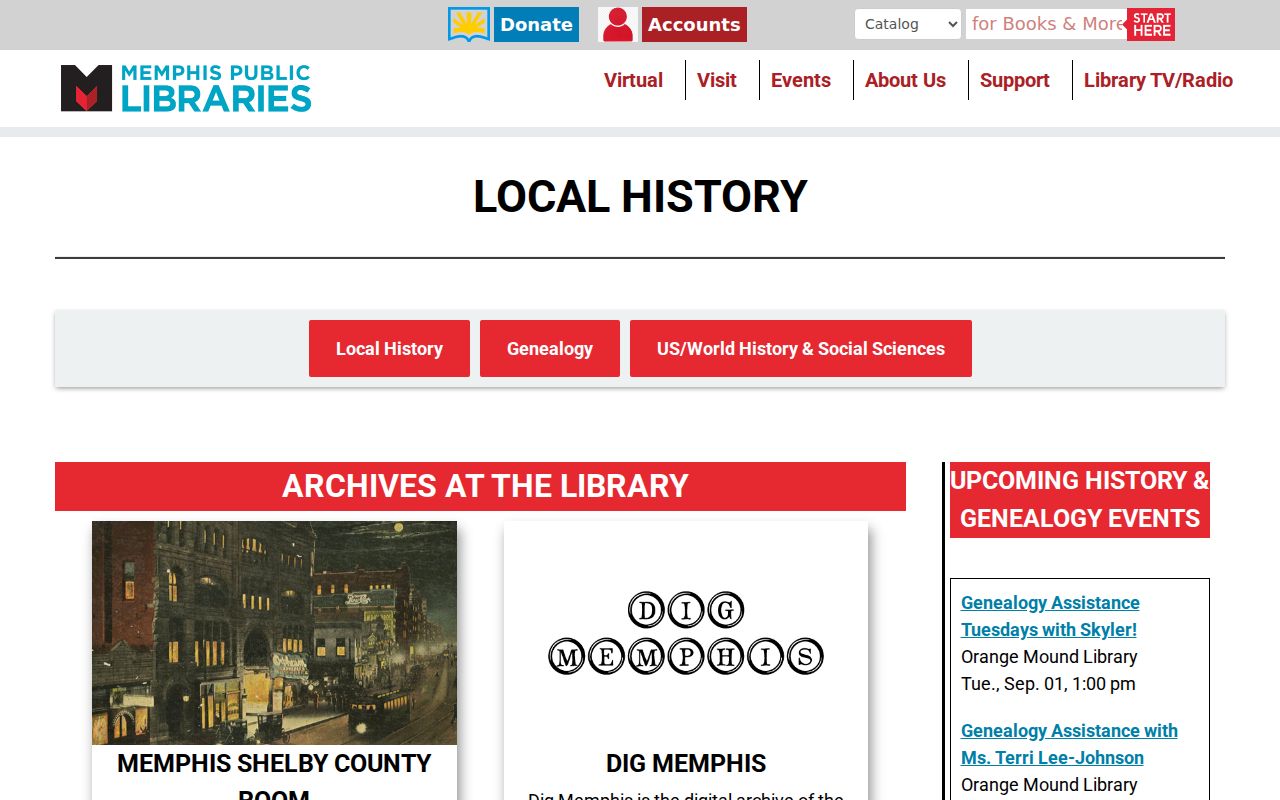
Library history collections offer a second place to compare a printed entry with maps, newspapers, clippings, and other local context.
Bartlett Street Sections in City Directories
For an old Bartlett-area address, move from the alphabetical page to that year’s street section. This is the documented historic address-to-listed-householder path in the collection. A street listing can help identify the household or business shown at a particular number, but it cannot prove ownership, continuous occupancy, or complete coverage. Volume geography also matters. A modern Bartlett address may have been outside the area named in the earlier directory.
Today’s Stage Road was once referenced as Raleigh-Somerville Road. When a current name fails in an older source, compare the historic road name with the legal description, subdivision, historic maps, surveys, aerials, and the directory street section. No authoritative citywide numerical-renumbering crosswalk was found, so a renumbering claim would be guesswork. For current parcel and street records, use the Bartlett street directory route instead of treating an old listing as current evidence.
Trace Bartlett City Directory Households
Follow one surname through adjacent directory years and preserve every spelling, initial, suffix, spouse notation, occupation, employer, phone, and address exactly as printed. A move, a change in work, or a widow notation is a lead. It is not final proof of identity. Pair the approximate directory decade with the relevant federal census release, and first check whether the census geography actually fits the Bartlett-area address. The Register’s 1865 Memphis census is a separate city-specific resource, while Memphis Public Libraries holds federal census microfilm from 1790-1920.
- Find the surname and reasonable variants in an alphabetical section for one year.
- Copy each printed form and residence clue before moving to an adjacent year.
- Check that year’s street section for the address and nearby listed entries.
- Compare the household timing with a census, deed, obituary, cemetery, or probate source.
- Ask the custodian for a permitted source record when an index lead needs confirmation.
A name that stops appearing may reflect a move, death, omission, changed spelling, or a boundary difference. It does not answer which explanation applies on its own.
Bartlett Directory Research at MPL
Memphis Public Libraries’ History Department, at 3030 Poplar on the fourth floor, holds regional city and telephone directories, yearbooks, census microfilm, county-record guides, and substantial clipping, photograph, map, and volume collections. Dig Memphis and the library’s contentDM archive can provide an initial online lead. A research visit becomes stronger when it begins with a full address, a name spelling, and a year range for the librarian.
Bartlett Library is a distinct city library at 5884 Stage Road. Its public materials invite visitors to call or ask for assistance, but the reviewed sources do not publish a shelf-by-shelf historical-directory run. City records document a 2024 library management transition, so call the particular library before assuming where a prior collection, card file, or remote-access right is now available.
Note: A regional library collection can supply context, but the original archive or government custodian remains the source for official records.
Bartlett Historical Files and Context
The Bartlett Historical Society’s Gotten House keeps early local files, artifacts, period material, photographs, and local-family context at 2969 Court Street. The house was built in 1871, became a museum after its 1990 dedication, and is open free on the first and third Sundays from 2 to 4 p.m. Special tours use the posted 901-343-6024 contact. No online personal-name catalog or published research-service fee was verified, so contact the Society rather than presuming a specific name file exists.
The Society’s museum information shows the local-history access point.
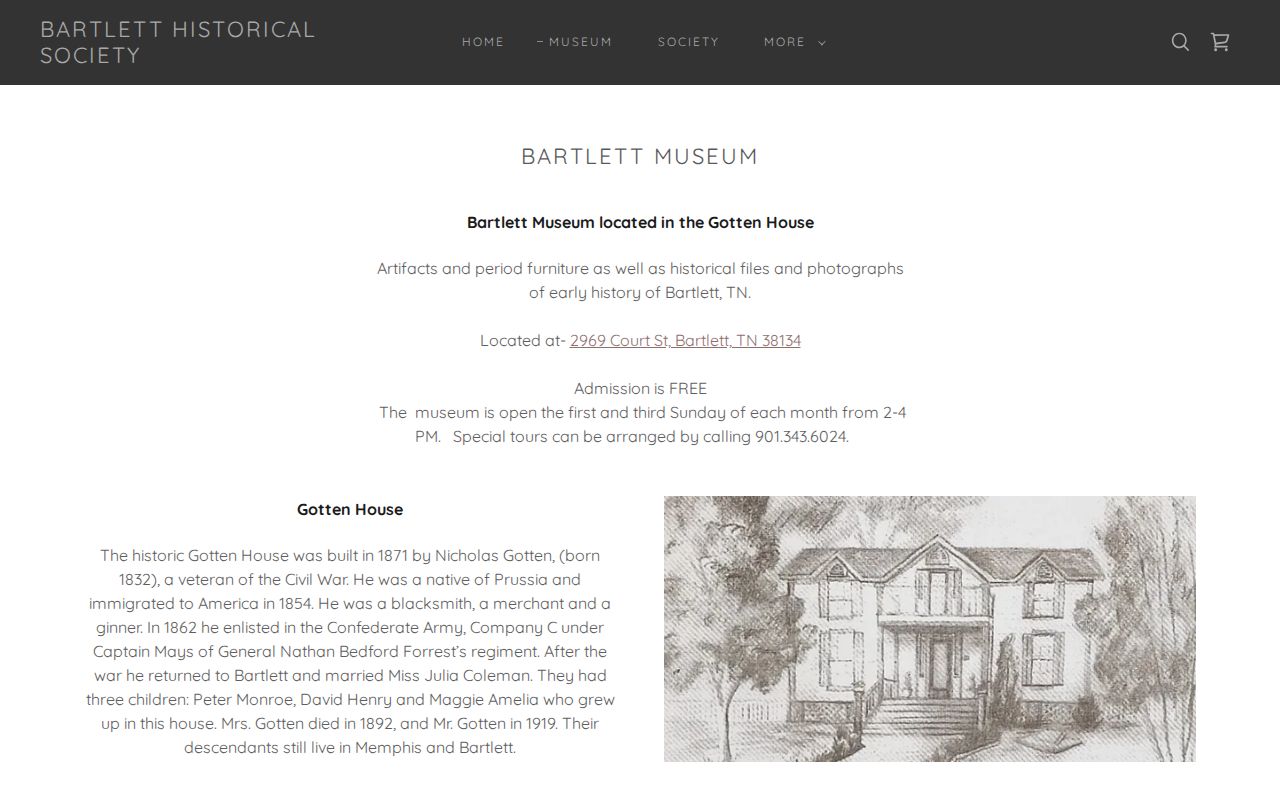
Its photographs and place history can add context to a directory clue without converting a local-memory source into proof of residence.
Bartlett Archive Companions to Directories
The Shelby Register archive supplies several lawful family-history companions when the city directories are too thin. Published collection ranges include naturalizations from 1856-1906, probate loose papers from 1820-1900, wills from 1830-2004, surveys from 1819-1962, and historic vital, cemetery, aerial, and directory material. The State Archives J.K.T. Smith guide also identifies a Bartlett collection with deeds, census, maps, clippings, court reports, Civil War material, and personal accounts. Ask archivists for access details or a call number rather than assuming every item is digitized.
Memphis Public Libraries’ Local History route also points researchers toward the University of Memphis Digital Repository and Rhodes College DLynx for regional maps, oral histories, and related materials. Those collections provide historical context rather than a current-person search. Bring the directory year and the exact address or name form to an archivist so the request can be tied to an identifiable volume or collection.
Directories can frame a family-history or heir trail, yet they cannot make a protected or sealed record public. Use the printed volume as one dated piece of a larger, verified record trail.